
Introduction
You are searching for a credible source for your research paper, and ScienceDirect keeps appearing at the top of your results. But you pause. Is ScienceDirect actually trustworthy? Can you cite it confidently in your academic work without worrying about reliability?
This question comes up more than you might think. With so much misinformation on the internet today, it is smart to question your sources before you use them. ScienceDirect credibility is not just a talking point for academics. It matters to students, scientists, healthcare professionals, and engineers who depend on accurate research every day.
In this article, you will find a clear, honest breakdown of what ScienceDirect is, why most experts trust it, how it maintains quality, what its real limitations are, and how it compares to other top research databases in 2026.
Quick answer: Yes, ScienceDirect is a highly credible and trusted academic source, but you still need to evaluate individual articles carefully before citing them.
What Is ScienceDirect?
ScienceDirect is a large online research platform that gives you access to scientific and medical literature. It was launched in 1997 and has grown into one of the biggest academic content databases in the world.
It is owned and operated by Elsevier, a Dutch information and analytics company that is one of the most recognized academic publishers globally. This is important to understand because ScienceDirect is not a journal itself. It is a platform. Think of it as a digital library that houses journals and books published mainly by Elsevier and some partner publishers.
The platform hosts over 12 million pieces of content, including articles from more than 3,500 academic journals and over 34,000 e-books. It covers fields ranging from physical sciences and life sciences to health sciences, social sciences, and humanities. Researchers worldwide use it daily as a core part of their academic workflows.
Is ScienceDirect Credible?
Yes, ScienceDirect is credible, and here is why that answer holds up in 2026.
Universities around the world subscribe to ScienceDirect through institutional agreements because they trust the quality of its content. The platform is used by over 50 million scientists and medical researchers worldwide. That level of adoption does not happen without a strong reputation for academic integrity.
Media Bias/Fact Check rates ScienceDirect as “Pro-Science” with “High” factual reporting and assigns it a “High Credibility” rating. The content on ScienceDirect is evidence-based, meaning it comes from research that has been tested, reviewed, and evaluated by qualified experts before it ever reaches you.
The platform also integrates with trusted academic tools such as Scopus and PubMed, which further reinforces its position in credible research ecosystems.
How Does ScienceDirect Ensure Credibility?
This is where it gets interesting. ScienceDirect does not just collect any article and publish it. The process behind what appears on the platform involves several quality checks.
Peer-reviewed journals: Most journals on ScienceDirect require every submitted manuscript to go through peer review before publication. This means qualified experts in the relevant field read and evaluate the research before it is accepted.
Strict acceptance rates: Elsevier journals accept only around 20% of submitted articles. That high rejection rate is a strong signal of quality control. It means most of what reaches you has already been filtered.
Editorial boards: Each journal maintains an editorial board made up of established researchers and subject matter experts who oversee the publication process and maintain academic standards.
Publication ethics: Elsevier enforces clear policies on research integrity, conflict of interest disclosures, authorship standards, and data transparency. These policies align with internationally recognized guidelines for ethical publishing.
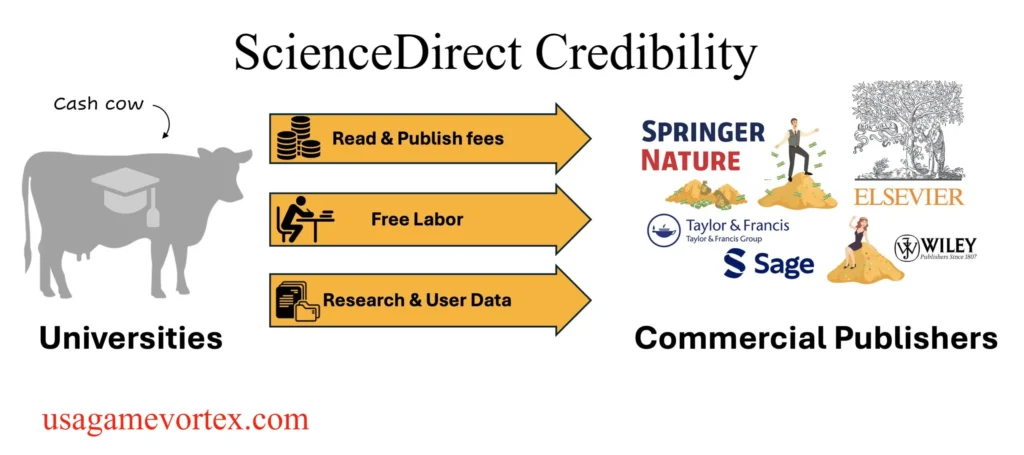
Is Every Article on ScienceDirect Peer Reviewed?
No, and this is one of the most important things you need to understand.
Not every piece of content on ScienceDirect has gone through peer review. The platform hosts some open-access journals that do not always apply the same rigorous peer review standards as traditional subscription journals. It also includes book chapters, review articles, and conference papers, which may vary in their review processes.
Here is how to tell if an article is peer reviewed. Check the journal’s “About” page directly. Look for editorial review information in the article itself. You can also use tools like Ulrichsweb to confirm a journal’s peer-reviewed status. Review articles summarize existing research and are different from original research articles, though both can appear on ScienceDirect.
Always verify the peer-review status of any specific article before citing it.
ScienceDirect vs Google Scholar
These two tools serve different purposes, and understanding that difference saves you a lot of confusion.
Google Scholar is a search engine. It indexes academic content from across the web, including journal articles, theses, books, and preprints. It is broad, free, and easy to use. However, it does not filter content by quality. You can find peer-reviewed articles alongside preprints, dissertations, and even self-published work.
ScienceDirect is a content database. It gives you access to the full text of articles hosted specifically on its platform, mostly from Elsevier journals. The content is more controlled and curated.
When it comes to citation quality, ScienceDirect generally points you to more reliable, publisher-verified sources. Google Scholar is better for discovering a wide range of literature quickly. The best approach is to use Google Scholar to find articles and then access the full text through ScienceDirect or similar databases.
For depth and full-text reliability, ScienceDirect has the edge. For breadth and free access, Google Scholar wins.
ScienceDirect vs PubMed
If you work in healthcare or biomedical research, you have definitely come across PubMed.
PubMed is run by the National Library of Medicine, which is part of the U.S. National Institutes of Health. It focuses specifically on medicine, biology, nursing, dentistry, and related health sciences. It indexes over 30 million papers and is completely free to search.
ScienceDirect covers a much broader range of disciplines, including engineering, physics, economics, and social sciences. It goes far beyond the medical field.
For pure clinical or biomedical research, PubMed is the gold standard. Many full-text articles on PubMed are freely accessible through PubMed Central. ScienceDirect, on the other hand, requires a subscription for most full-text content. However, ScienceDirect gives you access to journals from many more disciplines and includes books alongside articles.
If you are in healthcare, use both. They complement each other well.
Source:elsevier.com
ScienceDirect vs JSTOR
JSTOR and ScienceDirect both serve academic audiences, but they have different strengths.
JSTOR is known for its deep archive of humanities, social sciences, and arts content. It contains over 12 million scientific articles dating back as far as 1876. If you need historical academic literature, JSTOR is excellent.
ScienceDirect leans heavily toward current and recent scientific, technical, and medical research. Its content is more up to date and covers more STEM-related disciplines.
JSTOR is ideal for history, literature, cultural studies, and archival research. ScienceDirect is ideal for current science, medicine, and engineering. Many researchers use both depending on their discipline and research question.
Keychron K2 Wireless Mechanical Keyboard
Who Uses ScienceDirect?
ScienceDirect is not limited to any single type of user. The platform serves a wide range of professionals and students, including:
- University students writing research papers and theses
- Professors and academics conducting original research
- Scientists in laboratory and field settings
- Healthcare professionals looking for clinical evidence
- Engineers working on technical problems
- Policy researchers who need data-driven literature
This diverse user base reflects how broadly the platform is trusted across different fields and career stages.
Advantages of ScienceDirect
ScienceDirect offers several clear benefits that make it a preferred tool for serious researchers.
Massive collection: The platform provides access to thousands of peer-reviewed journals and tens of thousands of e-books across virtually every academic discipline.
High citation quality: Elsevier books on ScienceDirect have an average Field Weighted Citation Impact of 1.5, which is significantly above the industry average of 1.0. This means the research published here tends to be highly cited and influential.
Advanced search tools: You can filter results by date, journal, author, subject area, and article type. This makes finding exactly what you need much faster.
Citation export: ScienceDirect makes it easy to export citations in multiple formats compatible with citation managers like Zotero, Mendeley, and EndNote.
Regularly updated content: New research is added continuously, including articles in press that have been accepted but not yet formally published.
Source:mediabiasfactcheck.com
Limitations of ScienceDirect
It would not be honest to talk about ScienceDirect credibility without discussing its real drawbacks.
Subscription costs: The biggest barrier is access. Most full-text content requires either an institutional subscription or a pay-per-view purchase. If your university does not subscribe, getting full access can be expensive.
Not all journals are equal: The impact factor varies significantly across journals on the platform. A high-impact journal like The Lancet is very different from a newer, lower-visibility journal, even if both appear on ScienceDirect.
Publisher-specific content: Because ScienceDirect is primarily an Elsevier platform, you will miss important research published by other major publishers. It is not a neutral, publisher-agnostic database.
Quality varies in open access: Some open-access journals on the platform do not go through the same level of rigorous peer review as traditional subscription journals.
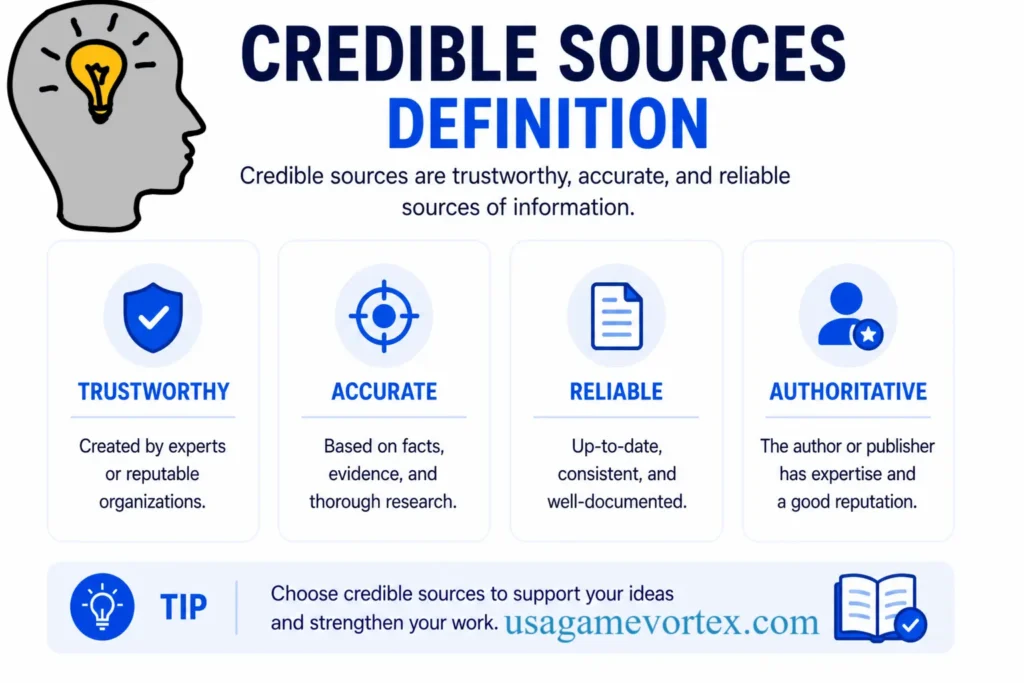
How to Check Whether a ScienceDirect Article Is Reliable
Even on a credible platform, individual articles can vary in quality. Here is what to look at before you cite something.
Journal reputation: Check the journal’s impact factor and its standing in its field. A well-known journal with a long history carries more weight.
Peer-review status: Confirm that the journal and specific article have undergone peer review. Look at the journal’s editorial policy page.
Citation count: Highly cited articles carry more influence, though citation count alone is not a perfect indicator of quality.
Publication date: In fast-moving fields like medicine or technology, older articles may be outdated. Always check when the research was published.
Author credentials: Look at who wrote the article and their institutional affiliations. Authors at respected research institutions add credibility.
Funding disclosures and conflict of interest statements: These are markers of transparency. A study that discloses its funding sources and potential conflicts is more trustworthy than one that does not.
Is ScienceDirect Credible for Students?
Absolutely. ScienceDirect is one of the most accepted academic sources for student research.
Universities around the world recognize and accept citations from ScienceDirect journals. If you are writing a research paper, thesis, or dissertation, citing a peer-reviewed article from ScienceDirect strengthens your work. The platform even offers citation export tools that format your references correctly for most academic citation styles.
For students who want to build strong academic writing habits, learning to search and evaluate ScienceDirect sources is a genuinely valuable skill.
Is ScienceDirect Credible for Medical Research?
Yes, with some care. ScienceDirect hosts major medical journals including The Lancet, which is one of the most respected medical publications in the world. Clinical studies, systematic reviews, and evidence-based medicine guidelines appear regularly on the platform.
Healthcare professionals use ScienceDirect to stay current with new treatment evidence, diagnostic findings, and clinical trials. However, as with any research source, you should always assess study design, sample size, methodology, and whether findings have been replicated before applying them in a clinical context.
For medical research, pairing ScienceDirect with PubMed gives you the most comprehensive coverage.
Common Misconceptions About ScienceDirect
Let us clear up a few things that often confuse people.
ScienceDirect is not a journal. It is a platform that hosts journals and books. When you cite research, you cite the specific journal and article, not ScienceDirect itself.
ScienceDirect does not write the research. The research is produced by independent scientists and academics. ScienceDirect simply provides access to it.
Not all content on ScienceDirect is free. While abstracts are usually free to read, most full-text articles require a subscription or payment.
Elsevier owns ScienceDirect, but not every journal on the platform is an Elsevier journal. Some partner publishers also make their content available through the platform.
Pros and Cons at a Glance
Pros:
- Massive, curated collection of peer-reviewed content
- Trusted by universities and researchers worldwide
- Covers a wide range of academic disciplines
- Advanced search and citation tools
- Integrated with Scopus, Mendeley, and other academic tools
- Regularly updated with the latest research
Cons:
- Most full-text content is behind a paywall
- Not all journals carry the same impact factor
- Primarily limited to Elsevier and partner content
- Open-access journals on the platform vary in peer-review rigor
- Individual articles still need independent evaluation
Conclusion
ScienceDirect is one of the most credible and widely trusted academic research platforms available in 2026. It brings together thousands of peer-reviewed journals, millions of articles, and tens of thousands of books under one roof. Universities, scientists, and healthcare professionals rely on it precisely because of its strong quality standards, peer-review requirements, and Elsevier’s long track record in academic publishing.
That said, credibility is not a blanket guarantee. The platform is only as good as the specific article you are reading. You still need to evaluate journals individually, check peer-review status, look at author credentials, and consider whether the research is current.
Use ScienceDirect as your trusted starting point. But always think critically, no matter where your research comes from.
Are you already using ScienceDirect in your research? What has been your experience with it? Share your thoughts, and feel free to pass this guide along to a classmate or colleague who might be wondering the same thing.
Frequently Asked Questions (FAQs)
1. Is ScienceDirect a reliable source for academic research? Yes. ScienceDirect is widely considered a reliable source because it hosts peer-reviewed journals from Elsevier and partner publishers. It is used by over 50 million researchers worldwide and is accepted by universities globally.
2. Is ScienceDirect peer reviewed? Most journals on ScienceDirect are peer reviewed, but not all. Some open-access journals on the platform do not apply the same rigorous review standards. Always verify the peer-review status of the specific journal and article you want to cite.
3. Who owns ScienceDirect? ScienceDirect is owned and operated by Elsevier, a Dutch academic publishing company founded in 1880 and headquartered in Amsterdam.
4. Is ScienceDirect free to use? You can search ScienceDirect and read abstracts for free. However, most full-text articles require an institutional subscription or a per-article purchase.
5. Can I cite ScienceDirect in my research paper? Yes, but you cite the specific journal and article, not ScienceDirect itself. ScienceDirect is the platform, not the publisher of the research.
6. How does ScienceDirect compare to Google Scholar? Google Scholar is a broad search engine that indexes content from many sources, including unreviewed material. ScienceDirect is a curated content database with controlled, publisher-verified content. Both are useful, and many researchers use them together.
7. Is ScienceDirect good for medical research? Yes. ScienceDirect hosts major medical journals, including The Lancet, and contains thousands of clinical studies. For comprehensive medical research, using ScienceDirect alongside PubMed is ideal.
8. How do I know if a ScienceDirect article is peer reviewed? Check the journal’s “About” page on ScienceDirect. You can also use external tools like Ulrichsweb to verify peer-review status. Look for editorial review information within the article itself.
9. Is ScienceDirect better than PubMed? Neither is strictly better. PubMed specializes in medicine and health sciences and is free. ScienceDirect covers a wider range of disciplines and includes books, but requires a subscription for full-text access.
10. Is ScienceDirect trustworthy for a literature review? Yes, ScienceDirect is an excellent starting point for a literature review. Its advanced search tools, peer-reviewed content, and citation export features make it one of the best platforms for academic literature reviews.
About the Author
Dr. Layla Hassan is an academic writing specialist and research strategist with over 12 years of experience in higher education and scholarly publishing. She has contributed to research literacy programs at universities across three continents and writes regularly about academic tools, citation practices, and research methodology. Her work helps students and professionals navigate the world of peer-reviewed literature with confidence.