
Introduction
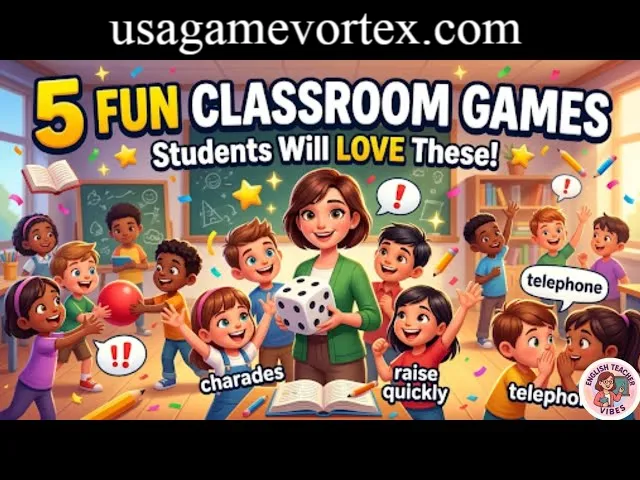
Have you ever watched a classroom go from sleepy and distracted to fully alive in under two minutes? That is exactly what happens when you introduce the right game at the right moment.
Fun games to play in class are not just a reward for finishing work early. They are powerful learning tools. Research from the American Psychological Association confirms that game-based learning improves memory retention by up to 90% compared to traditional lectures. That is a number worth paying attention to.
Whether you teach kindergarteners or high schoolers, this article gives you a complete, ready-to-use list of classroom games that work. You will find games for every subject, every group size, and every energy level. You will also get expert tips, a comparison table, and quick answers to the questions teachers ask most.
Let us get into it.
Why Do Classroom Games Actually Work?
Before we jump into the list, you deserve to know the “why” behind the strategy.
Games trigger dopamine release in the brain. Dopamine is the chemical linked to motivation and reward. When students feel motivated, they pay attention. When they pay attention, they learn faster and remember longer.
Dr. Jane McGonigal, a leading game researcher and author of “Reality Is Broken,” has studied the science of play for over two decades. She argues that games create a state of “urgent optimism,” where players believe success is possible and worth pursuing. That mindset is exactly what every teacher wants in their classroom.
A 2023 Gallup Student Poll found that only 47% of students feel engaged in school on most days. Classroom games directly address that disengagement. They give students a reason to show up mentally, not just physically.
Best Fun Games to Play in Class (By Category)
Quick Warm-Up Games (Under 5 Minutes)
These games work perfectly at the start of class. They wake students up and get their brains ready to learn.
1. Four Corners
Label each corner of the room with a number or letter. Call out a question with four possible answers. Students move to the corner that matches their answer. It gets bodies moving and checks understanding instantly. usagamevortex
2. Two Truths and a Lie
Each student shares three statements about themselves or about the lesson topic. Two are true. One is false. The class votes on which one is the lie. This works brilliantly as a review game for any subject.
3. Stand Up, Sit Down
Read out statements related to your lesson. Students stand if the answer is true and sit if it is false. Simple, silent, and surprisingly effective for checking comprehension.
Team-Based Classroom Games
These games build collaboration and communication skills while reinforcing content.
4. Quiz Quiz Trade
Each student gets a card with a question on one side and the answer on the other. Students walk around, quiz each other, trade cards, and repeat. Kagan Cooperative Learning introduced this method, and teachers worldwide have reported major gains in vocabulary retention after using it consistently.
5. Kahoot!
This digital platform lets teachers create quiz-based games that students join on their devices. A 2022 study by the University of Melbourne found that students who used Kahoot! scored 22% higher on post-lesson assessments than those who did not. The platform boasts over 300 million users globally, making it one of the most trusted edtech brands in classrooms today.
6. Relay Review
Divide students into teams. Place a set of questions at the front of the room. One student from each team runs up, answers a question, and runs back. The next student goes. The first team to answer all questions correctly wins. This game rewards speed and accuracy equally.
Vocabulary and Language Games
These games make word learning feel like play, not punishment.
Source: Rutgers Alternate Route
7. Word Association Chain
Start with a vocabulary word from your lesson. Each student adds a word connected to the previous one. Anyone who hesitates for more than five seconds or repeats a word is out. The last student standing wins.
8. Taboo in the Classroom
Create cards with subject-specific terms. One student tries to get their team to guess the word without saying it. This forces students to think about definitions in new ways. It is especially powerful in science and social studies classes.
9. Spelling Bee Remix
Instead of simply spelling a word, students must also use it correctly in a sentence. This version tests both spelling and comprehension simultaneously.
Math and Logic Games
10. Math Baseball
Split the class into two teams. Ask a math question. If the student answers correctly, they get a “hit.” Wrong answers are outs. Teams rotate after three outs. Students love the competitive energy this format brings. usagamevortex
11. 24 Game
Give students four numbers. They must use addition, subtraction, multiplication, or division to make those four numbers equal 24. The first student to find a solution wins the round. This game sharpens mental math skills faster than almost anything else.
12. Bingo Review
Create bingo cards filled with answers from your current unit. Call out clues or questions instead of numbers. Students cover the matching answer. The first to complete a row wins. This simple game has worked in classrooms for generations because it genuinely works.
Creative and Critical Thinking Games
13. Fishbowl
A small group sits in the center of the classroom and discusses a topic while the rest of the class observes and takes notes. Students rotate in and out. This format builds listening skills and teaches students how to have structured academic conversations.
14. Jigsaw Learning
Divide students into expert groups. Each group studies a different section of the material. Then students regroup so that each new group has one expert from every topic. Each expert teaches their section. This method, developed by educational psychologist Elliot Aronson, increases individual accountability dramatically.
15. Debate It Out
Give students a controversial but age-appropriate topic related to your subject. Split the class into two sides regardless of personal opinion. Students must argue the assigned position using evidence. This builds critical thinking and research skills at the same time. usagamevortex
Classroom Games Comparison Table
| Game | Time Needed | Group Size | Subject Fit | Tech Required |
|---|---|---|---|---|
| Kahoot! | 10 to 20 minutes | Any size | All subjects | Yes |
| Four Corners | 3 to 5 minutes | Any size | All subjects | No |
| Quiz Quiz Trade | 10 to 15 minutes | 10 or more | Any | No |
| Math Baseball | 15 to 20 minutes | 10 or more | Math | No |
| Jigsaw Learning | 30 to 45 minutes | 12 or more | Any | No |
| 24 Game | 5 to 10 minutes | Any size | Math | No |
| Taboo | 10 to 15 minutes | Any size | Vocabulary | No |
Tips From Expert Teachers
Here are proven tips from educators who use classroom games every week.
Keep the rules simple. If students spend more than two minutes learning how to play, you lose momentum. The best classroom games have rules you can explain in under sixty seconds.
Always connect the game to the lesson objective. Ask yourself: what skill or knowledge will students practice during this game? If you cannot answer that question clearly, choose a different game.
Rotate game formats regularly. Students lose interest in any single game after about three to four uses. Keep a rotation of at least five to six games in your toolkit.
Source: Teach 4 the Heart
Set clear expectations before you begin. Students need to know what winning looks like and what respectful competition looks like. A quick reminder before the game starts saves everyone from chaos during it.
How to Choose the Right Game for Your Class
Choosing the right game depends on three factors.
Your lesson goal. Are you reviewing, introducing, or deepening understanding? Quick games like Stand Up, Sit Down work best for review. Jigsaw Learning works best for introducing complex new material.
Your available time. A ten-minute gap before lunch calls for a different game than a forty-minute free block. Always match the game length to your time window.
Your students’ energy level. After recess or gym, students need a channel for physical energy. Games like Four Corners or Relay Review give them movement. Right before a test, you want something calm and focused like Bingo Review.
Conclusion
Fun games to play in class transform how students experience learning. They boost engagement, improve memory retention, and make your classroom a place students actually want to be. You do not need expensive tools or complicated setups. Most of the games in this list require nothing more than a prepared teacher and a willing class.
Start small. Pick one game from this list and try it this week. Notice how your students respond. You might be surprised at how quickly a single game changes the energy in the room.
Which game are you most excited to try? Share it with a fellow teacher. The more educators who bring play into learning, the better outcomes every student gets.
Frequently Asked Questions
What are the best fun games to play in class without any materials?
Four Corners, Stand Up Sit Down, Two Truths and a Lie, and Word Association Chain all require zero materials. You only need your voice and your students.
Can classroom games work for high school students?
Absolutely. High school students respond especially well to competitive formats like Kahoot!, Debate It Out, and Math Baseball. The key is choosing topics that feel relevant and challenging, not childish.
How often should teachers use games in the classroom?
Most educational experts recommend incorporating some form of game-based activity two to three times per week. Daily use can lead to overstimulation, while monthly use does not provide enough benefit.
Are digital games better than physical classroom games?
Neither is universally better. Digital games like Kahoot! offer instant data and self-pacing. Physical games build social skills and movement. A healthy mix of both gives students the most benefit.
What is the fastest classroom game you can run?
Stand Up, Sit Down takes under three minutes and requires no setup. It is the fastest effective review game most teachers can run.
Do classroom games help with standardized test scores?
Research suggests yes. A 2022 meta-analysis published in the Journal of Educational Psychology reviewed 43 studies and found that game-based learning produced moderate to significant gains in academic achievement, including in tested subjects like math and reading.
How do I manage noise levels during classroom games?
Set a noise rule before the game starts. Use a signal like a clap pattern or a raised hand to call the class back to attention. Practicing the signal before the game begins prevents disruptions during it.
What are good classroom games for a substitute teacher?
Two Truths and a Lie, Bingo Review, and Telephone are all easy to explain and require minimal subject knowledge. These work well for substitutes who may not know the current curriculum.
Can games work in an online or hybrid classroom?
Yes. Kahoot!, Quizlet Live, and Gimkit all run effectively online. For hybrid settings, screen-sharing tools allow both in-person and remote students to participate simultaneously.
What is Jigsaw Learning and why do teachers love it?
Jigsaw Learning is a cooperative strategy where each student becomes an “expert” on one part of a topic and then teaches it to others. Teachers love it because it makes every student responsible for the group’s success, which increases accountability and participation dramatically.
About the Author: Johan Harwen is a veteran classroom educator with over 14 years of experience teaching grades 3 through 10 across public and private schools. She holds a Master’s degree in Curriculum and Instruction from the University of Wisconsin and specializes in game-based and project-based learning strategies. Sarah regularly contributes to education publications and runs teacher professional development workshops focused on student engagement and active learning techniques.
Email: johanharwen@314gmail.com
Author Name: Johan Harwen