
Introduction
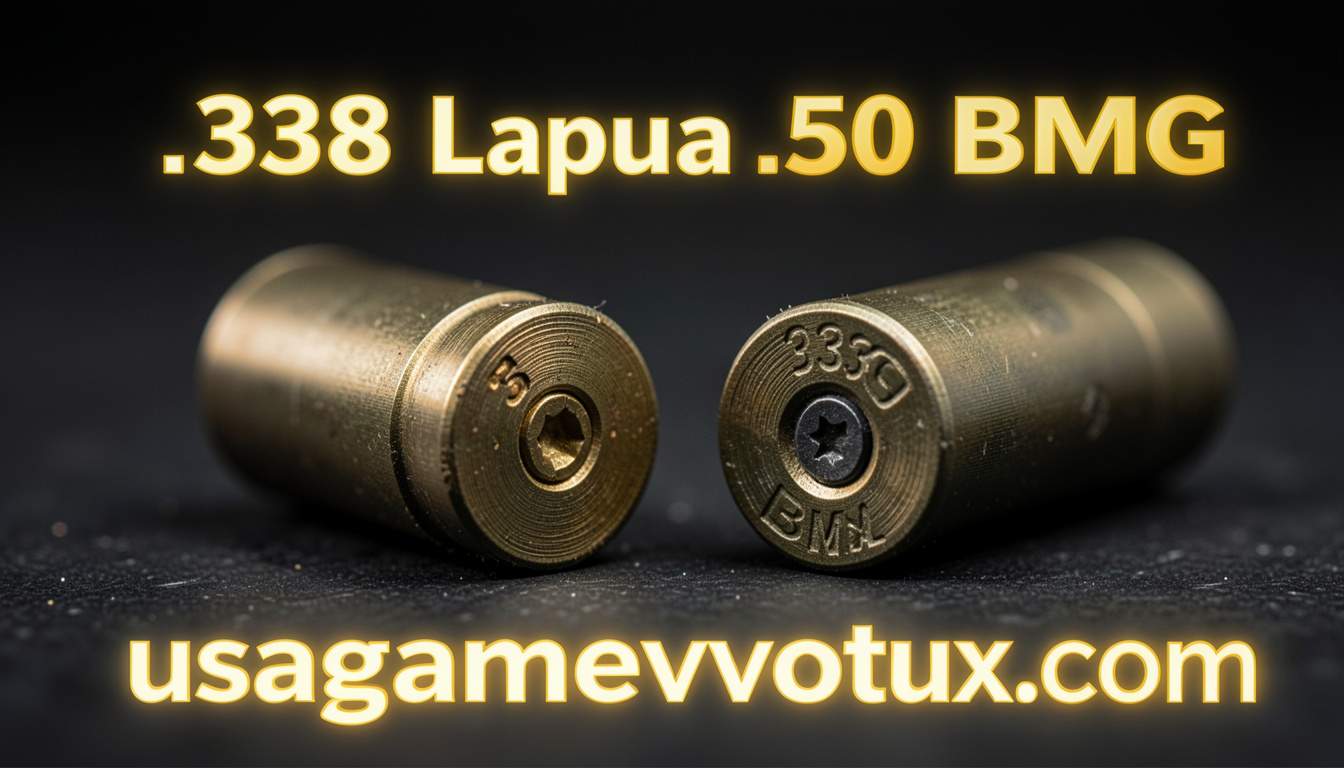
You’ve probably heard both names thrown around in long-range shooting conversations. The 338 Lapua vs 50 BMG debate is one of the most heated in the precision rifle world, and honestly, it deserves every bit of that attention. These two cartridges sit at the top of the long-range food chain, but they serve very different purposes.
If you are trying to decide between the two, you are not alone. Hunters, competitive shooters, military enthusiasts, and long-range hobbyists all wrestle with this question. Both rounds are legendary. Both are powerful. And both have serious advantages that make them worth considering.
In this article, you will get a clear, no-fluff breakdown of the 338 Lapua vs 50 BMG. We cover what each cartridge is, how they compare on accuracy and effective range, and which one actually makes sense for your shooting goals. By the end, you will know exactly which round fits your needs.
What Is .338 Lapua Magnum?
The .338 Lapua Magnum is a high-powered rifle cartridge developed in the 1980s. Finnish company Lapua and the British Ministry of Defence collaborated to create it. The goal was simple: build a round capable of reaching out past 1,000 meters with precision and energy to spare.
The cartridge fires a .338 caliber bullet, typically weighing between 250 and 300 grains. It launches that bullet at velocities around 2,900 feet per second. That combination of weight and speed gives it exceptional long-range performance. source: The Hunting Gear Guy
Key Specs of .338 Lapua Magnum
- Bullet diameter: .338 inches (8.58 mm)
- Typical bullet weight: 250 to 300 grains
- Muzzle velocity: approximately 2,900 fps
- Effective range: up to 1,750 meters in military use
- Recoil: significant but manageable for trained shooters
The .338 Lapua became famous in military sniper roles. British and other NATO snipers have used it effectively in Afghanistan and Iraq. It bridges the gap between standard sniper calibers and the massive .50 BMG.
What Is .50 BMG?
The .50 BMG stands for .50 Browning Machine Gun. It was designed by John Browning himself back in 1921. The United States military developed it for use in heavy machine guns, and it has been in active service for over 100 years.
The .50 BMG fires a half-inch diameter bullet. That bullet typically weighs between 650 and 800 grains. At those weights, it travels around 2,800 to 2,900 feet per second depending on the load and barrel length. The energy this round delivers is absolutely massive.
Key Specs of .50 BMG
- Bullet diameter: .510 inches (12.7 mm)
- Typical bullet weight: 650 to 800 grains
- Muzzle velocity: approximately 2,800 to 2,900 fps
- Effective range: up to 2,000 meters for anti-materiel use
- Recoil: extremely heavy, requires braking or specialized platforms
The .50 BMG was built for a job far beyond taking down a single target. It destroys equipment, penetrates light armor, and reaches targets at ranges most shooters never dream of. It is a beast of a round in every sense of the word.
338 Lapua vs 50 BMG: Quick Comparison
Here is a side by side look at how these two rounds stack up against each other.
| Feature | .338 Lapua Magnum | .50 BMG |
|---|---|---|
| Bullet Diameter | .338 in | .510 in |
| Bullet Weight | 250 to 300 gr | 650 to 800 gr |
| Muzzle Velocity | ~2,900 fps | ~2,800 fps |
| Muzzle Energy | ~4,800 ft-lbs | ~13,000 ft-lbs |
| Effective Range | 1,500 to 1,750 m | 1,800 to 2,000 m |
| Rifle Weight | 13 to 16 lbs | 25 to 35 lbs |
| Ammo Cost | $3 to $6 per round | $4 to $10 per round |
| Availability | Good | Moderate |
The numbers tell a clear story. The .50 BMG hits harder and reaches farther. But the .338 Lapua is lighter, cheaper to shoot, and far more practical for most applications.
Accuracy Comparison
This is where things get really interesting. Raw power does not always equal pinpoint accuracy. Both rounds are capable of exceptional precision, but they behave differently at extreme ranges.
.338 Lapua Accuracy
The .338 Lapua is widely regarded as one of the most accurate long-range cartridges ever created. Its ballistic coefficient is extremely high. That means it resists wind drift and maintains velocity better than most rounds over long distances.
Skilled shooters regularly hit targets at 1,200 to 1,500 meters with it. In competition settings, 338 lapua vs 50 bmg sub-MOA groups at 1,000 yards are achievable with quality rifles and ammunition. The recoil, while noticeable, does not destroy your sight picture the way heavier rounds do.
I personally find the .338 Lapua more satisfying to shoot for precision work. The platform is manageable, and feedback from each shot still helps you make corrections.
.50 BMG Accuracy
The .50 BMG is also accurate, but the challenge is the platform and the recoil. Rifles chambered in .50 BMG are large, heavy, and expensive. They require proper setup, rests, and often a bench to shoot effectively.
At ranges beyond 1,500 meters, the .50 BMG holds its velocity better due to its sheer bullet mass. Wind still moves it, but its weight helps it punch through crosswinds more stubbornly. Competitive shooters using .50 BMG in extreme long-range matches routinely connect at 2,000 yards and beyond.
The accuracy gap between the two narrows the farther out you go. Up to 1,500 meters, the .338 Lapua is arguably more practical for precision. Beyond 1,800 meters, the .50 BMG starts to take the lead.
Effective Range
Range is one of the most critical factors in this comparison, and it depends entirely on what you are trying to do.
Effective Range of .338 Lapua
The .338 Lapua Magnum remains effective against human-sized targets out to roughly 1,500 to 1,750 meters in trained hands. Military snipers have confirmed kills at beyond 1,500 meters using this cartridge. For most civilian shooters, the practical limit sits around 1,200 meters due to equipment and environmental variables.
It retains enough energy to perform reliably at those distances. Wind reading and elevation adjustments become critical, but the round responds predictably once you know your ballistics.
Effective Range of .50 BMG
The .50 BMG was designed with anti-materiel tasks in mind. It punches through light vehicle armor, takes out radar systems, and engages targets at 2,000 meters and beyond. Against personnel, military doctrine often cites an effective range of 1,800 to 2,000 meters.
The sheer energy it delivers at extreme distance is unmatched by anything in the .338 Lapua class. If you need to engage a target at 2,000 meters, the .50 BMG gives you a much larger margin of error in terms of energy on impact.
Which One Should You Choose?
The answer depends entirely on your purpose. Here is a simple way to think about it.
Choose the .338 Lapua if you want to:
- Shoot long range with a portable and manageable rifle
- Compete in precision rifle matches beyond 1,000 meters
- Hunt large game at extreme distances
- Keep ammunition costs relatively reasonable
- Carry your rifle in the field without a vehicle
Choose the .50 BMG if you want to:
- Shoot at 2,000 meters or beyond
- Engage hardened targets or light materiel
- Experience maximum raw power from a rifle platform
- Shoot from a bench or fixed position consistently
- Own a piece of military-grade ballistic history
For most shooters, the .338 Lapua Magnum makes more practical sense. It delivers elite long-range performance in a package you can actually use in the field. The .50 BMG is an incredible round, but it comes with size, weight, and cost that limits its everyday usability.
Conclusion
The 338 Lapua vs 50 BMG debate does not have one clear winner. It has two very different tools designed for two very different jobs. The .338 Lapua gives you extreme precision and portability at ranges most shooters will never need to exceed. The .50 BMG gives you raw, unstoppable power at distances that seem almost fictional.
If you are a precision shooter or hunter, the .338 Lapua is your round. If you want maximum engagement distance and do not mind the bulk, the .50 BMG earns its legendary reputation every time you pull the trigger.
Which one are you leaning toward? Drop your thoughts below or share this with a fellow long-range enthusiast who is asking the same question.
FAQ: 338 Lapua vs 50 BMG
Q1. Is .338 Lapua more accurate than .50 BMG?
At ranges up to 1,500 meters, the .338 Lapua is generally easier to shoot accurately because the platform is lighter and recoil is more manageable. Beyond 1,800 meters, the .50 BMG holds advantages due to its massive bullet mass.
Q2. What is the effective range of .338 Lapua vs .50 BMG?
The .338 Lapua is effective out to about 1,500 to 1,750 meters. The .50 BMG extends that to 1,800 to 2,000 meters, especially for anti-materiel applications.
Q3. Is .50 BMG legal for civilians?
In most US states, yes. The .50 BMG is legal for civilian ownership. However, California bans .50 BMG rifles. Always check your local laws before purchasing.
Q4. How much does .338 Lapua ammo cost compared to .50 BMG?
.338 Lapua ammo typically runs $3 to $6 per round. .50 BMG can cost $4 to $10 per round depending on the type. Both are expensive compared to standard rifle cartridges.
Q5. Can you hunt with .338 Lapua or .50 BMG?
Yes. The .338 Lapua is an excellent hunting round for large game at long range. The .50 BMG is legal for hunting in some states but is generally considered excessive for most game animals.
Q6. What rifles are chambered in .338 Lapua?
Popular options include the Accuracy International AXMC, Barrett MRAD, Remington 700 custom builds, and the Sako TRG-42. These are all bolt-action precision rifles.
Q7. What rifles are chambered in .50 BMG?
The Barrett M82A1 is the most iconic. Others include the Serbu BFG-50, the McMillan TAC-50, and the Accuracy International AX50. Most weigh 25 to 35 pounds.
Q8. Which round has more recoil, .338 Lapua or .50 BMG?
The .50 BMG produces significantly more recoil. It generates roughly three times the felt recoil energy of the .338 Lapua. Most .50 BMG rifles require heavy-duty muzzle brakes to make shooting tolerable.
Q9. Which is better for long-range competition, .338 Lapua or .50 BMG?
For matches up to 1,500 meters, the .338 Lapua dominates due to its accuracy and manageable platform. For extreme long-range competitions at 2,000 yards and beyond, the .50 BMG becomes competitive.
Q10. What does BMG stand for in .50 BMG?
BMG stands for Browning Machine Gun. The cartridge was originally designed by John Browning in 1921 for use in heavy machine guns and has served in US military roles ever since.
also read: usagamevortex.com
email: johanharwen@314gmail.com
Author Name: Jake Merritt
About the Author : Jake Merritt is a long-range shooting enthusiast and firearms writer with over 12 years of experience on the range and in the field. He has tested dozens of rifle platforms and calibers across multiple shooting disciplines, from competitive precision rifle matches to big game hunting in North America. Jake writes to help both new and experienced shooters make smarter, more informed decisions about their gear.