Introduction
Picture yourself behind the wheel of a lightweight two-seater, a long hood stretching ahead of you, wind rushing past, and a straight-six engine singing at full throttle. That is exactly what the BMW Z3 delivers, and it is exactly why enthusiasts still talk about it decades later.
The BMW Z3 arrived in 1996 and changed the game for affordable open-top sports cars. It was the first mass-produced BMW Z-series car, the first BMW built entirely outside Germany, and even the first BMW to appear in a James Bond film. Those are not small achievements for a roadster that started life competing with the Mazda MX-5.
In this guide, you will get the full picture. We cover the Z3’s history, its key specifications, every model and trim you need to know, and the performance numbers that still impress today. Whether you are thinking about buying one or simply want to understand what made it special, you are in the right place.
BMW Z3 History: From Concept to Cult Classic
How the Z3 Was Born
The idea behind the BMW Z3 was simple. Mazda’s MX-5 had taken the world by storm in the late 1980s, proving that buyers wanted lightweight, fun, affordable roadsters. BMW noticed. Development on the Z3 roadster started in 1991, led by engineer Burkhard Göschel. The exterior design came from Joji Nagashima, who completed the look by mid-1992.
The Z3 officially launched via a video press release by BMW North America on June 12, 1995. Production began that September at BMW’s plant in Greer, South Carolina. That made the Z3 the first BMW model manufactured entirely outside of Germany.
The James Bond Moment
BMW scored a massive marketing win in 1995 when the Z3 appeared in the James Bond film GoldenEye. This was the first time a non-British car featured prominently in the Bond franchise. BMW even released a limited “James Bond Edition” Z3 through the Neiman Marcus Christmas catalog to celebrate. The film’s fictional gadget spec included stinger missiles behind the headlights and a parachute braking system. Reality was slightly less dramatic, but the exposure was priceless.
Production and End of the Line
By the end of 1999, BMW had already sold over 170,000 units of the Z3. The final car rolled off the production line on June 28, 2002. Over the full production run, the Z3 sold more than 300,000 units worldwide. It was replaced by the E85 Z4, which carried the roadster torch forward. source: Wikipedia
BMW Z3 Specifications: The Numbers Behind the Legend
Here is a quick look at the core dimensions that defined the Z3:
- Length: 158.46 to 159.45 inches depending on variant
- Width: 66.61 to 68.5 inches
- Height: approximately 49 to 51 inches
- Wheelbase: 96.3 to 96.81 inches
- Curb weight: between 2,535 lbs and 3,197 lbs
- Trunk space: 5.8 cubic feet
The Z3 sat on a shortened version of the E36 platform, known as the E36/5 compact platform. It used a rear semi-trailing arm suspension design borrowed from the older E30 3 Series. That choice later drew criticism from driving purists, but it kept costs down and made the car accessible to a wide audience.
Engine Options Through the Years
BMW offered several engine options across the Z3’s lifespan. Early cars launched with four-cylinder engines that felt underwhelming by most accounts. The real turning point came with the arrival of the 2.8-liter straight-six in 1997.
Here is a simplified breakdown of the key engines:
- 1.8-liter four-cylinder (launch model, modest power, best for budget buyers)
- 1.9-liter four-cylinder (140 hp, became the best-selling early variant)
- 2.8-liter straight-six (193 hp, transformed the Z3’s reputation)
- 3.0-liter straight-six (231 hp, introduced around 2000)
- S50 / S52 straight-six (M Roadster, up to 321 hp in European spec)
- S54 straight-six (introduced in 2001, unified power for both markets)
At the 2000 model year refresh, BMW bumped engines across the board. The 2.0-liter grew to 2.2 liters, the 2.3-liter became a 2.5-liter, and the 2.8-liter stepped up to a full 3.0-liter unit. These were meaningful upgrades, not just marketing tweaks.
BMW Z3 Models and Trims: Which One Is Right for You?
The Standard Roadster
This is the Z3 most people know. It came as a two-seat open-top roadster with either a manual or automatic transmission depending on the engine. The soft top folded down manually, and a removable hardtop was available as an optional accessory. Four-cylinder models featured a single tailpipe. Six-cylinder versions got dual tailpipes and wider rear fenders on pre-facelift cars.
A facelift arrived in 1999 that modernised the headlights and tidied up the interior. These changes were not applied to the M models, which kept their original look throughout production.
The Z3 Coupe: The Clown Shoe
In 1998, BMW unveiled the Z3 Coupe at the Frankfurt Motor Show. This model started as a passion project. A group of BMW engineers built it in their spare time after hours, pitching the idea of a shooting brake based on the Z3 platform. The higher-ups liked what they saw and greenlighted production.
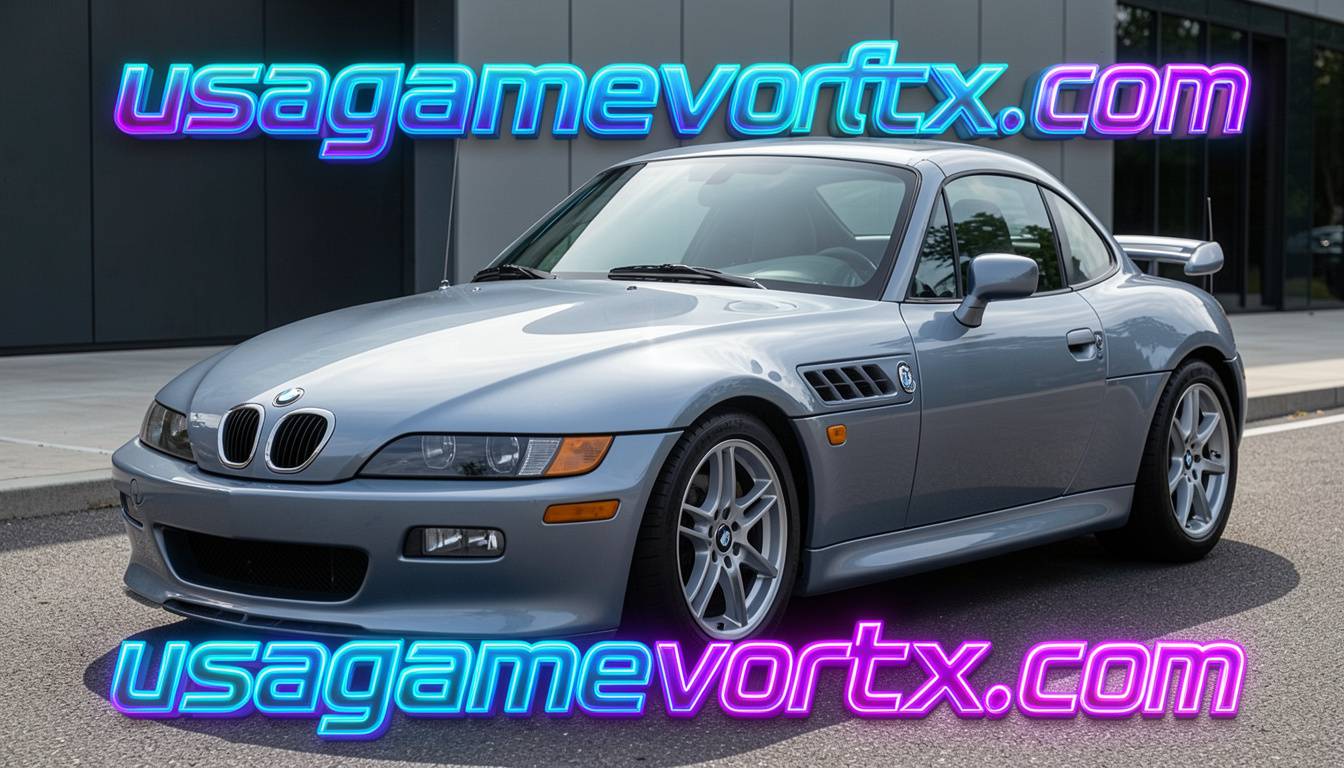
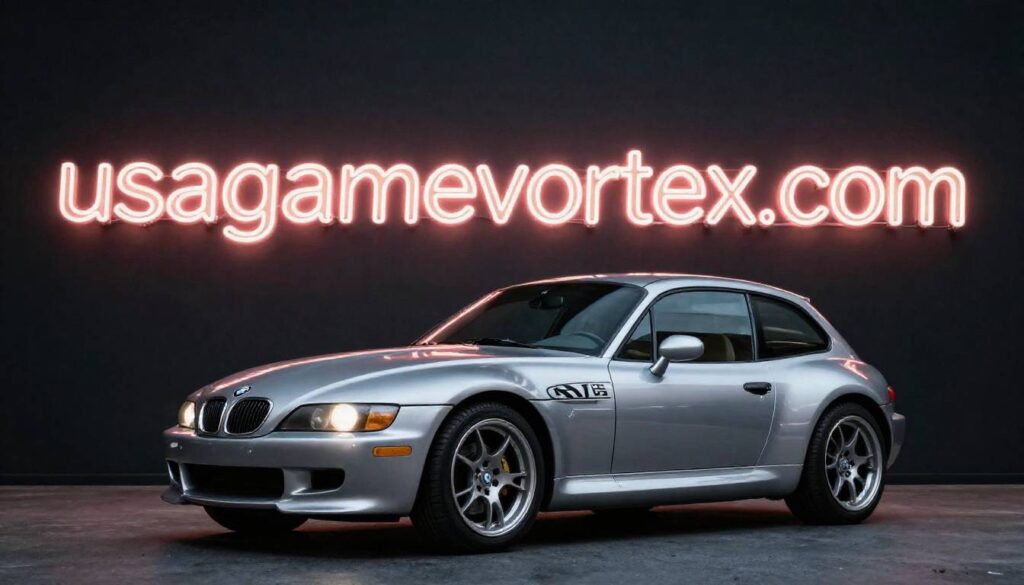
The Z3 Coupe shares the same platform as the roadster but is 2.7 times stiffer thanks to its chassis-stiffening hatch area. It earned the nickname “clown shoe” because of its bulbous rear roofline, but it quickly became a cult classic. The M Coupe version in particular is now a serious collector’s item.
The M Roadster and M Coupe: The Real Weapons
The M Roadster arrived in 1997. It carried the S50 engine in Europe, producing 321 horsepower. North American buyers received the S52, which put out a still-impressive 240 hp. In 2001, BMW unified both markets with the new S54 engine from the E46 M3.
Compared to the standard Z3, M models included:
- A limited-slip differential
- A wider rear track
- Larger brakes shared with the E36 M3
- Quad exhaust pipes
- Bespoke M-specific wheels and aerodynamic body parts
- A voltmeter, oil temperature gauge, and clock in the center console
- Unique M-styled seats
The M Coupe debuted alongside the standard Z3 Coupe in 1998 and was powered by the same engines as the M Roadster. It was one of the most unusual-looking cars BMW had ever produced, and enthusiasts loved it for exactly that reason. One respected UK publication included it in their Car of the Year list in 1998.
BMW Z3 Performance: What It Feels Like to Drive One
Standard Models
The 2.8-liter Z3 was quick enough to worry a Mercedes SLK of the same era. It pulled harder through the gears and delivered more accessible torque, making it a more relaxed but genuinely fast car on the road. The later 3.0-liter version does 0 to 62 mph in around 6 seconds and tops out at 149 mph.
M Roadster Performance Numbers
The M Roadster takes things to a different level entirely. Here are the key figures:
- 0 to 60 mph: 5.3 seconds
- 0 to 62 mph: 5.4 seconds
- Top speed: 155 mph (electronically limited)
- Horsepower (S52, EU spec): 321 hp
- Engine: 3.2-liter inline-six
- Transmission: 5-speed manual only
- Weight: approximately 3,142 lbs
Those numbers put the M Roadster comfortably ahead of the Porsche Boxster S of the same era in outright power. It was genuinely quick, and the sound that straight-six made at high revs is something you never forget once you have heard it.
I have driven enough modern roadsters to say with confidence that the Z3 M still feels involving in a way that many newer cars simply do not. The steering communicates, the chassis responds, and the engine rewards commitment.
Conclusion: Should You Care About the BMW Z3 Today?
The BMW Z3 is a car that earned its reputation the hard way. It launched with modest four-cylinder engines that disappointed some buyers. But it grew into something genuinely special, especially once the six-cylinder engines and M variants arrived. Over 300,000 units sold is proof that buyers responded.
Today, the Z3 sits near the bottom of its depreciation curve. That means you can find a well-maintained example for a reasonable price, especially compared to rivals like the Porsche Boxster or even the later BMW Z4. The M versions are already climbing in collector value, so the window to buy one at a fair price may be closing.
If you love driving for the sake of driving, the BMW Z3 still delivers. It is not perfect, and it was never meant to be. But it is honest, characterful, and endlessly enjoyable on the right road.
What do you think: is the Z3 an overlooked classic, or did it always deserve more credit? Share your take in the comments below.
FAQ: BMW Z3 Common Questions Answered
Q1. What years did BMW produce the Z3?
BMW produced the Z3 from 1995 to 2002. Road cars went on sale in 1996, and the final unit rolled off the production line on June 28, 2002.
Q2. How many BMW Z3 cars were made?
BMW sold over 300,000 units of the Z3 during its full production run. By the end of 1999 alone, more than 170,000 had already been sold.
Q3. What engine does the BMW Z3 M Roadster have?
The M Roadster used the S50 or S52 inline-six depending on the market. In 2001, both markets switched to the more powerful S54 inline-six engine, the same unit found in the E46 M3.
Q4. How fast is the BMW Z3 M Roadster?
The M Roadster reaches 0 to 60 mph in 5.3 seconds and has an electronically limited top speed of 155 mph. European-spec cars produced up to 321 horsepower.
Q5. Where was the BMW Z3 manufactured?
The Z3 was manufactured in Greer, South Carolina, USA. It was the first BMW model to be built entirely outside of Germany.
Q6. Is the BMW Z3 a good car to buy today?
Yes, especially for driving enthusiasts on a budget. Six-cylinder and M variants offer excellent performance and are now considered modern classics. M Coupe values in particular are rising.
Q7. What is the difference between the BMW Z3 and Z3 M?
The M models have more powerful engines, a limited-slip differential, wider tracks, larger brakes, quad exhausts, and unique bodywork. They also come only with a 5-speed manual transmission.
Q8. Did the BMW Z3 appear in a James Bond film?
Yes. The Z3 appeared in GoldenEye in 1995. It was the first non-British car to feature prominently in the Bond franchise and the first of three Bond films to feature a BMW.
Q9. What replaced the BMW Z3?
The E85 BMW Z4 replaced the Z3 in 2002. The Z4 shared its architecture with the Toyota Supra in later generations.
Q10. What is the BMW Z3 Coupe “clown shoe”?
The Z3 Coupe earned this nickname because of its unusual bulbous rear roofline. It started as an after-hours passion project by BMW engineers and became a cult classic, especially in M Coupe form.
also read: usagamevortex.com
email: johanharwen@314gmail.com
Author Name: James Whitfield
About the Author : James Whitfield is an automotive journalist and classic car enthusiast with over 12 years of experience writing about European sports cars. He has test-driven more than 200 vehicles across the UK and Europe and specialises in BMW, Porsche, and vintage roadsters. His work has appeared in several leading motoring publications, and he believes the best drives always happen on empty country roads.